How to stop checking phone constantly: 7 steps to focus
By Florian Lindner · Last updated: 4 October 2026
How to stop checking phone constantly: rely on design, not willpower. Add friction by putting your phone in another room. Turn off every notification that doesn’t come from a real person. Keep your workspace phone-free and pick a set replacement action for the urge to reach. Studies suggest that just having your phone visible nearby may cost you attention.

You sit down to work and end up reading the news again
How to stop checking phone constantly? Not with good intentions, but with a smart system built on distance, friction and replacement actions.
Be honest: how many times have you picked up your phone today without meaning to? You open your laptop to finish that presentation or to study for an exam. Two minutes later you’re scrolling a feed. Before you know it, twenty minutes are gone.
That’s not a character flaw. It’s a contest between your prefrontal cortex and an entire industry built to capture your attention. And it’s not a fair fight.
Phone distraction is one of the most common triggers for procrastination. For the full picture, read our complete guide on how to stop procrastinating.
Why your phone beats your willpower
Your phone wins because it hits three psychological levers at once: variable rewards, zero friction and a perfectly grooved habit loop. Against that combination, willpower alone hardly stands a chance.
Variable rewards: the slot machine principle
Every glance at your phone is a pull on a slot machine lever. Sometimes there’s an enthusiastic reply, a like, some good news. Mostly: nothing. That unpredictability is exactly what makes the reach so compelling. Your dopamine system doesn’t respond to the reward itself as much as to the possibility of one. That’s why you check even when you know there’s probably nothing new.
Zero friction: reaching costs nothing
Your phone is always there. Unlocking takes less than a second. No run-up, no hurdle, no decision. Access is smoother than almost anything else in your day. Compare that with your presentation or your study notes: you need concentration, a clear starting point and a willingness to put in effort. The phone asks for none of that. When two options compete, the easier one almost always wins.
The habit loop: trigger, reach, relief
Reaching for your phone runs on autopilot. The loop looks like this: a trigger (boredom, a hard task, an uncomfortable feeling) creates tension. Picking up the phone releases that tension instantly. Your brain learns: phone = relief. After thousands of repetitions, it stops asking your permission. That’s why you catch yourself holding the phone without remembering deciding to pick it up. If you want to understand the inner triggers behind your procrastination more deeply, look at the root causes of putting things off.
What the research shows
The research offers clear hints: a phone in sight and within reach may cost you attention, and most of the times you pick it up are driven by you, not by notifications.
The best-known study comes from Ward, Duke, Gneezy and Bos (2017). In two experiments with almost 800 participants in total, the group whose phones lay visibly on the desk performed worst on tests of working memory and fluid intelligence. The best results came from the group whose phones were in another room. Lead author Adrian Ward (University of Texas at Austin) describes the effect roughly like this: you aren’t consciously thinking about your phone, but the process of not thinking about it uses up part of your limited cognitive capacity. The researchers call it “brain drain”.
The second finding concerns the cost of every interruption. Sophie Leroy (2009) coined the term “attention residue”: when you switch from one task to another, part of your attention stays stuck on the previous one. You’re back in the document, but part of your mind is still in the chat. Gloria Mark and colleagues (2008) also showed that people work faster after interruptions, but at the price of noticeably more stress, frustration and time pressure. The widely quoted figure of about 23 minutes comes from interviews with Gloria Mark. That’s how long it took on average in her observations before people returned to an interrupted task, often after detours through other tasks.
In fairness: later replication attempts, such as Ruiz Pardo and Minda (2022), sometimes found the brain drain effect weaker than in the original. So the evidence is mixed. In the original study, the effect was strongest for people highly attached to their phones, and later studies confirm it only in part. In practice, that means distance is a cheap, sensible experiment, not a guaranteed lever.
The third finding busts a myth. Heitmayer and Lahlou (2021) filmed 37 people in everyday life and analysed more than 1,100 smartphone interactions. The result: 89 percent of all phone pickups were started by the users themselves, not by notifications. So the problem isn’t only in the phone. It sits in the loop between you and the phone.
How to stop checking your phone constantly: step by step
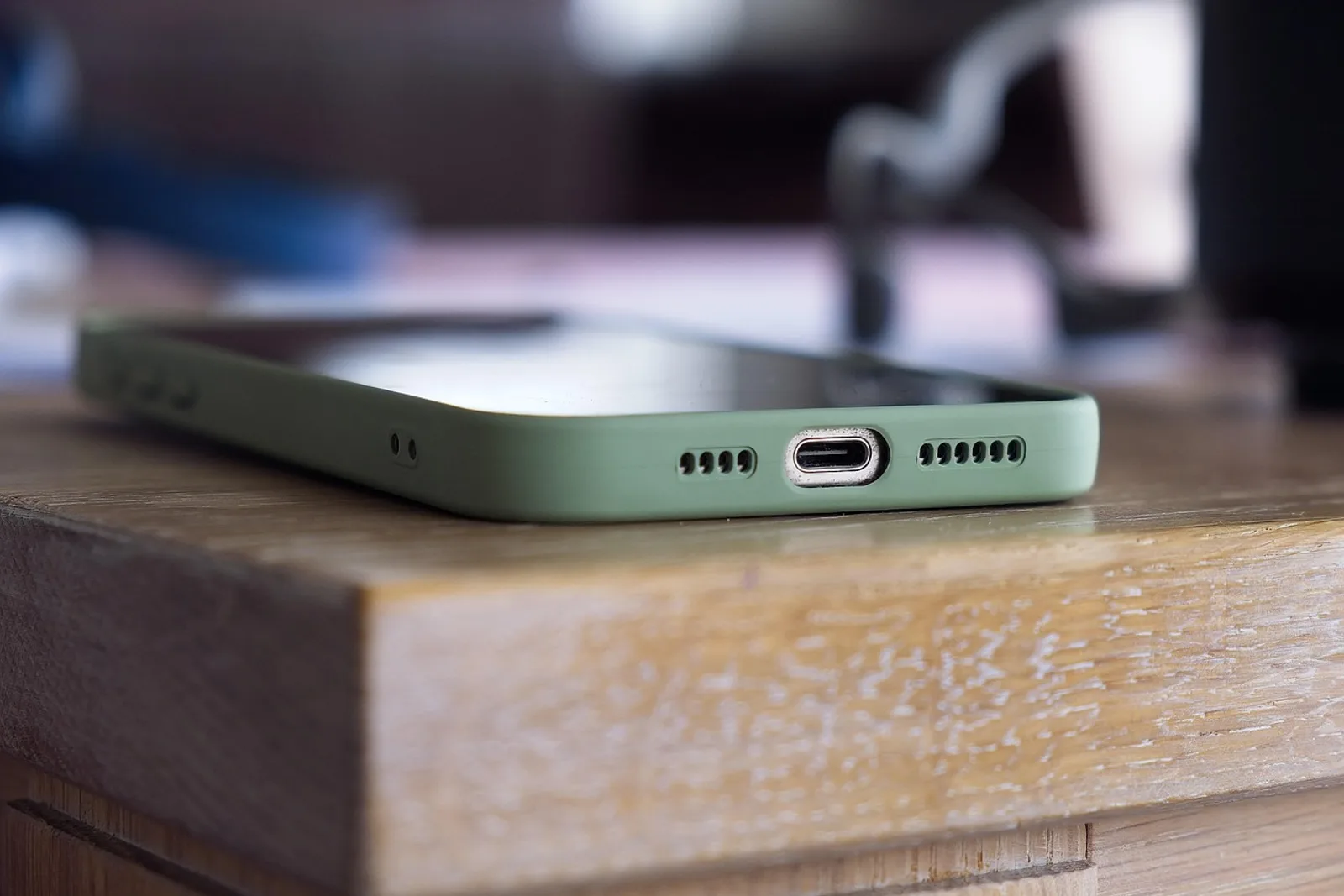
The most effective way to stop letting your phone distract you: change your environment, not your willpower. Here’s a sensible order, from the easiest step to the more demanding ones. It works for office days and just as well if you’re figuring out how to avoid phone distractions while studying.
-
Add friction: put your phone in another room. This step follows directly from the brain drain study and is the easiest to put into practice. A hypothetical example: you put your phone in a hallway drawer at 8:30 in the morning and only take it out again at lunch. Many people only realise how loud the thing was in their head once it goes quiet. The same idea can help if you want to stop scrolling your phone at night: charge it outside the bedroom.
-
Turn off every notification that doesn’t come from a person. Rule of thumb: only real people get to interrupt you, never apps. Calls and messages from your family stay on. News, social media, shopping, games: all silent. Focus mode or Do Not Disturb can do much of this for you. It takes about ten minutes in your settings and removes most external triggers.
-
Design your environment for getting started. Your desk should make exactly one thing easy: the work. Clear screen, today’s task visible, phone out of sight. If starting tasks is hard for you in general, the guide to the 10-second rule for beating procrastination can help. Environment design and a starting ritual belong together.
-
Choose a replacement action. The urge to reach won’t disappear right away, so give it a new destination. For example: urge arrives → breathe out slowly once, take a sip of water, write three more words. Sounds trivial, but it’s an approach from habit research: you don’t delete the loop, you redirect it.
-
Work in clear blocks with set check times. Don’t ban your phone forever. That tends to tip into rebellion. Allow it on purpose: 50 minutes of focus, then 10 minutes of phone if you want. When you plan your blocks, it helps to know in advance what actually matters, so prioritise your tasks first.
-
Make your screen boring. Greyscale mode, apps off the home screen, social media only in the browser and logged out. Every extra hurdle lowers your use a little. No single step works miracles. Together, they add up.
-
Track your screen time for one week. Not to beat yourself up, but as a starting point. What you measure, you can change. Many people seriously underestimate how much they use their phone.
An honest caveat: none of these steps makes you immune. On stressful days you’ll still reach for your phone. The difference is that with a system, you find your way back faster and are more likely to finish what you started. If finishing is your sore spot, read on with why you never finish the things you start.
The 3 most common mistakes
Most people don’t fail for lack of discipline. They trip over three typical thinking errors when putting the steps into practice.
Mistake 1: relying entirely on willpower
“I’ll just leave it alone” is the plan that hasn’t worked for years. Willpower is a limited daily resource, and your phone challenges it hundreds of times a day. One weak moment is enough. A well-designed environment usually carries you further than willpower alone.
Mistake 2: a radical detox instead of a system
Seven days fully offline, then back to normal life, and two weeks later everything is the same as before. A detox treats symptoms, not the loop. A daily routine in which your phone has a clear place tends to last longer. And if you plan too perfectionistically (“from Monday, NEVER social media again”), you’re just building yourself a bigger fall. Why all-or-nothing thinking tends to backfire is explained in how to stop being a perfectionist.
Mistake 3: not filling the gap
If you only remove the phone, you’re left sitting with the uncomfortable feeling the reach used to numb. Boredom, overwhelm, reluctance: they need a new outlet. Movement, a short conversation, the replacement action from step 4. And in the long run, a reason that makes focus worth it. Finding your motivation is part of that.
Phone distraction and identity: the Hypnotic Rise approach
Whether you reach for your phone also depends on how you see yourself. People who see themselves as focused often have to fight the urge less. That’s where Hypnotic Rise’s hypnoses come in: not at your list of apps, but at the identity your behaviour grows out of. They work with anchoring techniques and other methods. You can read about the research behind it on the page on the science behind our approach.
Hypnosis is a form of self-help. It does not replace therapy or medical advice. If your phone use feels out of control or is linked to anxiety, low mood or sleep problems, please talk to a qualified professional.
Conclusion: your focus can be designed
How to stop checking phone constantly comes down to this: create distance, cut notifications, shape your environment, give the urge a replacement action. Nothing more, but done consistently.
The research gives you a tailwind. In the original study, participants with their phones in another room performed best. Later studies confirm this only in part, but trying it costs you nothing. Every interruption you avoid spares you attention residue and the tiring climb back into your task. And because most pickups start with you, the lever is in your hands, not in the device.
Start small: today, just step 1. Phone in another room, one hour, one attempt. That’s all you need to begin. If a bigger pattern sits behind the distraction (putting things off, avoiding, never quite finishing), our overview on how to stop procrastinating shows you the whole picture.
And still, you probably know this feeling: you know exactly what to do, and in the evening you pick up the phone anyway. That isn’t a lack of knowledge. The reach sits deeper than any checklist, in the picture you have of yourself. That’s exactly where hypnosis comes in.
If you’d like to find out how that feels for you, try the free introductory hypnosis. Choose the topic that fits you best and listen to the ready-made hypnosis in the evening, ideally when your phone is already in another room. If you want to go deeper afterwards, there’s a free 45-minute 1:1 analysis session with one of our top coaches, in which we look closely at all 11 areas of your life with you. From there, Hypnotic Rise can follow: a programme built only for you, with every hypnosis written only for you.
Try it yourself
Knowledge alone rarely changes anything. Listen to how your topic can feel different.


FAQ: how to stop checking phone constantly
How do you stop checking your phone constantly without giving it up completely?
Limit access, not the device. Put your phone in another room during focus blocks and give yourself set times to check it. Ward et al. (2017) suggest that physical distance may improve thinking performance, although later studies sometimes found a weaker effect. In the original study, switching the phone off was less effective than distance. Add silent notifications and a greyscale screen. You stay reachable, but your brain stops fighting the temptation all day.
What happens if you turn off phone notifications? Is that enough to stop checking your phone constantly?
Usually not. Heitmayer and Lahlou (2021) found that 89 percent of all smartphone interactions were started by the users themselves, with no notification involved. You reach for the phone out of habit, not because of a signal. Turning off notifications or using focus mode is a sensible first step. It works much better combined with more friction, a phone-free environment and a replacement action for the urge to reach.
How long does it take to stop compulsively checking your phone?
You may notice some changes on your very first try, for example when your phone is in another room. The brain drain study by Ward et al. (2017) points in that direction. The automatic reach takes longer to fade, because it is a deeply ingrained habit loop. How long varies a lot from person to person. Habit research (Lally et al., 2010) found ranges from a few weeks to several months. Think in weeks, not days, and don’t treat slip-ups as failure.
Is a phone in another room really better than airplane mode?
In the study by Ward et al. (2017), the group whose phones were in another room performed best on working memory and intelligence tasks, even better than the group with phones switched off on the desk. The researchers’ explanation: as long as the device is visible or within reach, your brain spends resources ignoring it. Later studies sometimes found a weaker effect. Distance is still the simplest experiment you can run.
Why do I check my phone even when no notification came?
Because your brain has been trained on variable rewards. Sometimes something exciting is waiting, mostly it isn’t. That unpredictability is exactly what makes the reach so compelling, much like a slot machine. According to Heitmayer and Lahlou (2021), most phone checks are started by users themselves. The trigger is often internal: boredom, a hard task, an uncomfortable feeling. The phone becomes the escape hatch, which is why learning how to stop letting your phone distract you starts with noticing that moment.
Sources
- Ward, Duke, Gneezy & Bos (2017): Brain Drain: The Mere Presence of One’s Own Smartphone Reduces Available Cognitive Capacity. Journal of the Association for Consumer Research
- University of Texas at Austin (2017): The Mere Presence of Your Smartphone Reduces Brain Power, Study Shows. UT News, press release
- Ruiz Pardo & Minda (2022): Reexamining the “brain drain” effect: A replication of Ward et al. (2017). Acta Psychologica
- Leroy (2009): Why is it so hard to do my work? The challenge of attention residue when switching between work tasks. Organizational Behavior and Human Decision Processes
- Mark, Gudith & Klocke (2008): The cost of interrupted work: more speed and stress. Proceedings of CHI 2008
- Heitmayer & Lahlou (2021): Why are smartphones disruptive? An empirical study of smartphone use in real-life contexts. Computers in Human Behavior
- Lally, van Jaarsveld, Potts & Wardle (2010): How are habits formed: Modelling habit formation in the real world. European Journal of Social Psychology
Go deeper: How to stop procrastinating
Where it shows up in life

Free · ready to listen · no credit card
Your free hypnosis
Pick a ready-made hypnosis on your topic. Free, no credit card.
or book a free 1:1 analysis call right away