How to Stop Procrastinating: 7 Steps to Finally Start
By Florian Lindner · Last updated: 4 October 2026
Learning how to stop procrastinating is about emotion regulation, not discipline: you avoid a feeling, not the task. If-then plans are well supported (Gollwitzer & Sheeran 2006, d = 0.65). A ten-minute start, smaller chunks, fixed daily anchors and self-forgiveness after setbacks also help. The first step matters more than doing it perfectly.

Why do I procrastinate so much?
Procrastination sticks because it isn’t really a time management problem. It’s an emotional one. You aren’t putting off the task. You’re putting off the feeling the task triggers. That’s why to-do apps, calendar hacks and good intentions fail so reliably. They treat the wrong symptom.
You probably know the pattern all too well. The task has been sitting there for days. It isn’t even especially hard. Yet somehow you’re on your third coffee, tidying your desktop, answering an email that could easily have waited until next week.
And here’s the absurd part: you’re not usually like this. At work, you deliver. People rely on you. That’s exactly what makes it so draining.
You don’t put off tasks, you put off feelings
Behind every delay is a feeling you’re avoiding. With your tax return, it might be overwhelm. With a difficult conversation at work, the fear of conflict. With your own project, the quiet worry that the result might not be good enough.
The task is only the trigger. The real problem is the tension it creates in you. Putting things off is the fastest way to get rid of that tension. For now. If you want to understand the deeper patterns behind it, our guide to the causes of procrastination goes into the full analysis.
Your brain rewards avoidance instantly
Every time you push an unpleasant task aside, you get an instant reward: relief. That feeling is real, measurable and strong. Your brain learns a simple lesson from it. Avoidance works.
The costs come later. The stress the night before the deadline, the guilt, the extra work. But to your reward system, “later” is a weak currency. Psychologists call this temporal discounting: what happens now counts for more than what happens in two weeks. A lot more.
Why willpower alone isn’t enough
Willpower depends on the day. It’s not a foundation. On good days, you pull yourself together. On bad ones, after a draining meeting, on too little sleep, with a head full of noise, your intention loses to the part of you that wants the sofa. Almost every time.
That’s why people who manage to procrastinate much less don’t rely on discipline. They build structures that automate the start: fixed triggers, small first steps, clear if-then rules. More on that in a moment.
What the research shows
The research is clear: procrastination is a failure of self-regulation, not a flaw in your character. And it’s widespread. According to the meta-analysis by Steel (2007), which analysed 691 correlations, 15 to 20 percent of adults describe themselves as chronic procrastinators. Among students, 80 to 95 percent procrastinate at least occasionally.
Steel identified four main factors that predict procrastination: how unpleasant the task is, how far away the reward lies, how impulsive someone is, and how little they trust themselves to follow through. Lack of time doesn’t appear on that list.
Sirois and Pychyl (2013) described the mechanism behind it: procrastination is a strategy for repairing your mood in the short term. We sacrifice the wellbeing of our future self to feel better right now. Tim Pychyl, a psychologist at Carleton University, summed it up in The New York Times (2019): “Procrastination is an emotion regulation problem, not a time management problem.”
The longitudinal study by Tice and Baumeister (1997) showed how expensive this strategy gets. Procrastinating students had less stress than their peers at the start of the semester. By the end, they had more stress, more symptoms of illness and lower grades across all assessments. A short-term gain, a long-term bill.
Now the good news. Gollwitzer and Sheeran (2006) showed across 94 independent studies that implementation intentions, meaning concrete if-then plans, improve goal achievement with a medium-to-large effect size of d = 0.65. It’s one of the best-supported interventions in motivation psychology. And you can use it in two minutes.
How to stop procrastinating: step by step
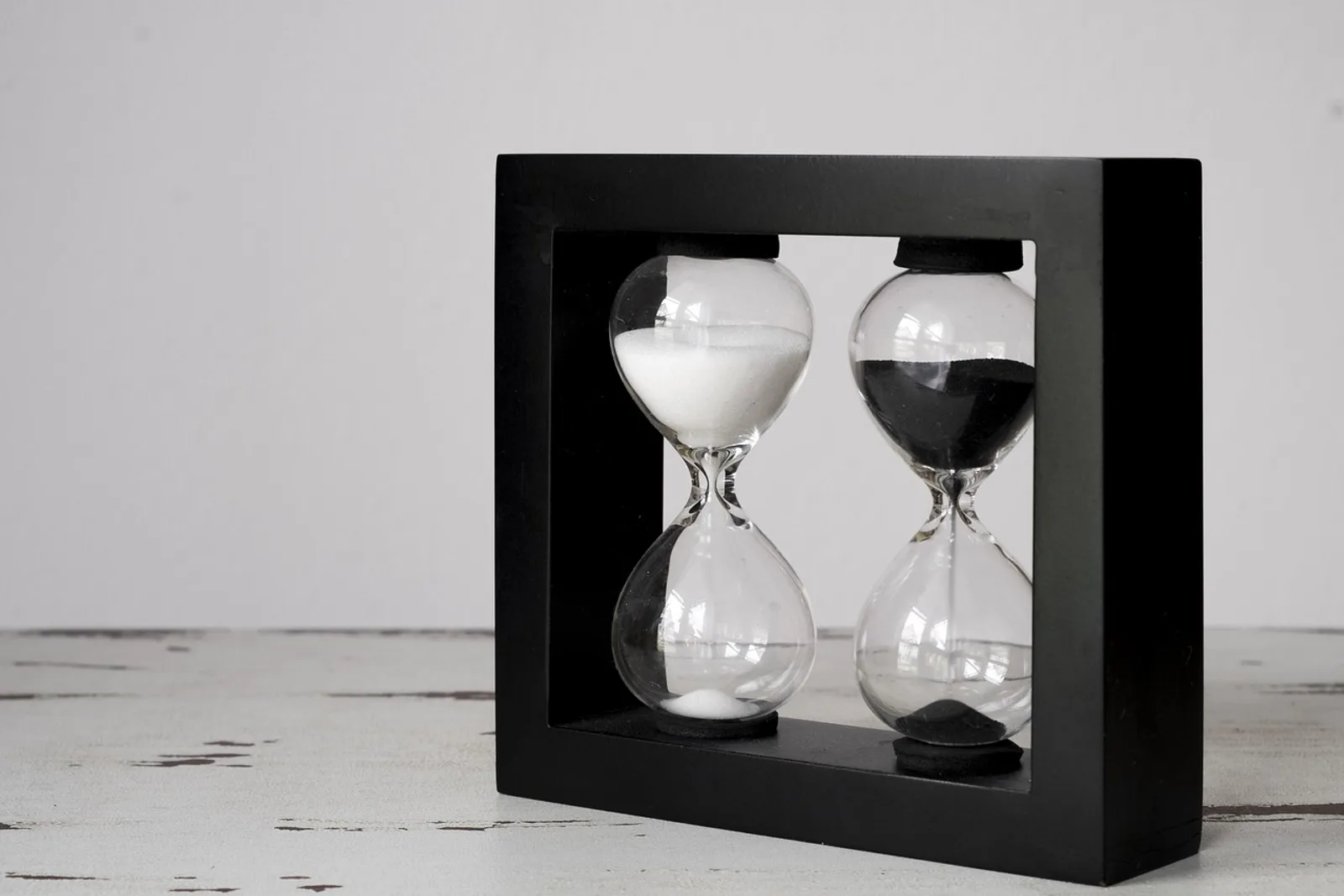
You overcome procrastination in a clear order: first recognize the feeling, then shrink the way in drastically, then automate the start. The seven steps below build on each other. If you’ve ever wondered how to start a task you’ve been dreading, begin with the first one today.
Step 1: Name the feeling behind the delay
Next time a task feels blocked, don’t ask yourself, “Why am I so undisciplined?” Ask, “Which feeling am I avoiding right now?” Overwhelm, boredom, fear of being judged: just naming it takes some of the pressure off.
Example: “I’m putting off the presentation because I’m afraid my boss will tear it apart.” That’s uncomfortable to say out loud. But now you know what you’re actually working on.
Step 2: Make the first step smaller than feels reasonable
Keep shrinking the task until the resistance disappears. Not “write the report” but “open the document and type the heading.” Feels ridiculous? Good. That’s exactly where you want to be.
Example: instead of “clear out the basement,” the step is “open one box.” Nothing more. Whatever happens after that happens voluntarily. And it usually does.
Step 3: Write an if-then plan
Decide on the trigger and the action in advance: “When I open my laptop at 9 a.m. tomorrow, I’ll write the first paragraph of the proposal before anything else.” This formula works because it takes the decision out of the critical moment. It’s exactly the mechanism Gollwitzer and Sheeran found at d = 0.65.
Example: “When I get back to my desk after lunch, I’ll call the client back first.” Written down, stuck to your monitor.
Step 4: Start for ten minutes, no more
Give yourself permission to stop after ten minutes. The resistance is almost never about the work itself. It’s about starting before you stall. Once you’re in, the task often carries you along on its own.
And if you really do stop after ten minutes: that’s fine too. Ten minutes is infinitely more than zero. Our guide to learning how to get started shows you how to train the art of starting.
Step 5: Block the escape routes
Make avoiding harder than starting. Phone in another room, email closed, one single window open. Every open escape route is an invitation, and when in doubt, your brain will accept it.
Example: if you write in the morning before opening your inbox, distraction simply never gets a chance.
Step 6: Tie your start to a fixed anchor
Link the start of your work to something that happens every day anyway: your first coffee, closing the front door behind you, sitting down at your desk. “Sometime today” becomes a fixed point in your routine, and after a few weeks you’ll often start without much negotiation. We explain how anchor techniques like this work in detail on our methods page.
Step 7: Forgive yourself for the last delay
Self-blame drags procrastination out. Self-forgiveness shortens it. If you beat yourself up after a wasted day, you create exactly the unpleasant feelings you’ll run from next time. A vicious circle. A study by Wohl, Pychyl and Bennett (2010) found that students who had forgiven themselves for procrastinating before their first exam procrastinated less before the next one.
Example: “Nothing happened yesterday. It happens. When I get out of my 2 p.m. meeting today, I’ll open the file.” Full stop. Move on.
How to stop procrastinating at work, when your to-do list stares back
At work, you rarely procrastinate out of laziness. Vague tasks, constant availability and packed calendars sabotage the start. Being busy is the most elegant form of procrastination in any office: you look productive while the one important thing stays untouched.
Picture a team lead at a software company: full calendar, happy team, numbers on track. But the planning work for next quarter, the one task that really matters, has been sliding for weeks. Instead, she answers Slack messages within minutes. It feels like work. It’s actually escape.
The most important task first, not the loudest
Loudness isn’t a measure of importance. Emails, pings and drive-by requests push to the front because they promise small, instant wins. The planning work stays quiet. And loses. So block the first focused hour of your day for the task with the most resistance, before your inbox takes the wheel.
Vague tasks attract procrastination
What isn’t clearly defined doesn’t get started. “Revise the strategy” isn’t a to-do. It’s fog. Translate every vague task into a concrete next action: “Spend 20 minutes listing three things that need to change in sales.” Only then does your brain have something it can start with.
The after-work effect: why you put everything off in the evening
In the evening, you often procrastinate because a full day leaves its mark: you’re tired, your head is full, and the sofa is closer than your intention. That doesn’t mean you don’t care about your goal. “I’ll go for a run after work” loses to the sofa at 7 p.m. because the mental energy it would have had in the morning is gone.
The conclusion is inconvenient but practical: don’t schedule important personal plans in your weakest hours. What really matters to you belongs in the morning or your lunch break. Or, in the evening, it needs a way in so small that it works even when you’re tired. Putting on your running shoes counts. Five minutes of stretching counts.
And if nothing gets done in the evenings, week after week, it’s worth a second look. Often it isn’t energy that’s missing, but a real reason. Our guide to finding motivation helps you figure out what you’re actually running towards.
Big projects: when the mountain looks too high
Big projects get put off because your brain sees them as one single, unconquerable mass. The answer is to break them down ruthlessly into stages, each with its own beginning and end. Nobody writes “a book.” You write 300 words today.
Three rules have proven themselves. First: define the next stage so it can be done in 90 minutes at most. Second: end each session in the middle of something easy. Yesterday’s half-finished sentence is today’s easiest way in. Third: make progress visible. A tick per stage, a growing list, whatever works. What matters is that you can see the mountain moving.
An example: if you write down “build website,” you might not open your laptop for three weeks. If you write “today: look at three competitor sites and note five bullet points,” you’ve started within 40 minutes. The difference isn’t effort. It’s the size of the first bite.
With big projects, the second critical point isn’t the start but the last mile. Many people begin and then stall just before the finish line. Our guide to finishing what you start explains why that happens and how to cover the last stretch.
Hidden procrastination: perfectionism and fake productivity
The most dangerous kind of procrastination doesn’t look like procrastination. It looks like work. One more round of research, one more revision, one better tool: perfectionism is procrastination with a clear conscience.
The mechanism is the same as with classic avoidance. As long as you’re “still optimizing,” you don’t have to face judgment. The fear of feedback gets redirected into diligence. From the outside, it looks exemplary. From the inside, it feels like running on a hamster wheel.
An honest test: would a colleague you trust say the work is good enough? If yes, and you keep polishing anyway, you’re no longer optimizing. You’re hiding.
What helps: a fixed cut-off you define in advance. “Two rounds of revisions, then it goes out,” decided before the fear gets a say. Done beats perfect. Not as an excuse for sloppy work, but as protection against the endless loop.
Endless scrolling between two blocks of work belongs in this category too: small escapes that feel like breaks but make getting back in more expensive every time.
Procrastination and your self-image
How you see yourself helps decide whether you start. If you quietly file yourself under “procrastinator,” you hand your brain the matching script for every task, and it follows that script reliably.
This isn’t mysticism. It’s simply consistency: people act in ways that fit their self-image. That’s why stacking up techniques rarely works as long as the story behind them stays the same. “I’m just someone who leaves everything to the last minute” isn’t a description. It’s a self-fulfilling prediction.
The lever is small, repeated counter-evidence. Every ten-minute start is a data point for a different story: “I’m someone who starts.” Over time, you believe it. Not because you’ve talked yourself into it, but because you’ve collected the evidence.
When procrastination is a warning sign
If for weeks you can barely find the drive for anything, it may not be procrastination at all, but a sign of a depressive episode. In that case, it belongs in professional hands. Low drive combined with low mood, sleep problems, loss of interest or constant exhaustion is a matter for a doctor or psychotherapist, not for self-optimization.
That’s not weakness. It’s a sensible distinction. The steps on this page can help when your everyday life works but procrastination keeps getting in the way. They don’t replace treatment. Your doctor is a good first point of contact. In the US, you can call or text 988 at any time. In the UK, NHS 111 can point you in the right direction, and Samaritans are available on 116 123. In Germany, the appointment service on 116 117 arranges first psychotherapy appointments. In Austria, you can reach the health hotline on 1450 or the crisis line on 142, free of charge and around the clock.
And even below that threshold, one honest caveat applies: no method in the world ends procrastination permanently. Even with the best system, you’ll put things off now and then. The goal isn’t perfection. It’s turning three lost weeks into three lost hours.
The 3 most common mistakes
Most attempts to overcome procrastination fail because of three avoidable mistakes: waiting for motivation, planning the perfect fresh start, and collecting techniques instead of using them.
Mistake 1: You wait for motivation
Motivation follows action, not the other way round. If you wait until you “feel like it,” you’ll wait in vain on the days that matter. Professionals in every field start according to plan, not according to mood. Surprisingly often, the desire to keep going shows up after the first few minutes.
Mistake 2: You plan the perfect fresh start
“From Monday, everything changes” is the classic, and almost always the beginning of the next failure. The big overhaul (up at 5 a.m., workout, meditation, no sugar) overloads your self-regulation and collapses after three days. Change one thing. Keep it small. Stick with it for two weeks before you touch the next one.
Mistake 3: You collect techniques instead of using them
One more article, one more tool: they feel like progress but are often procrastination in disguise. Pick one technique from this page and use only that one until it sticks.
How to stop procrastinating and get things done: go deeper
This hub page gives you the overview. Each part of the topic has its own in-depth guide. Here’s the complete cluster:
- Procrastination: understanding the causes: Why you really put things off, and the psychological roots behind the pattern, from fear of failure to temporal discounting.
- Learning to get started: Concrete techniques for the hardest moment of any task: the first five minutes.
- Finishing what you start: Why projects fizzle out at 80 percent and how to cover the last mile.
- Letting go of perfectionism: How to keep your standards but stop hiding behind optimization.
- Stopping phone distraction: Practical strategies against the biggest escape route of our time.
- Avoiding deadline stress: How to stop putting things off until the last minute and break the cycle of late nights and exhaustion afterwards.
- Prioritizing tasks: How to recognize what really counts instead of following the loudest task.
- Finding motivation: What actually drives you, and how to connect that drive to your tasks.
Why knowing what to do is rarely enough
Maybe you already knew some of these steps. That’s no coincidence. Procrastination is rarely a knowledge problem. The pattern sits deeper than your intention: in the feeling that shows up just before you start, and in the story you tell about yourself.
That’s where hypnosis comes in. It doesn’t work on what you know but on the pattern underneath. In the free hypnosis to get to know Hypnotic Rise, you choose a ready-made hypnosis on a topic that fits you, such as a blocked start, and listen to it in the evening when you have some quiet. Hypnosis is self-help. It doesn’t replace medical or psychotherapeutic treatment.
If you’d like to go deeper after that, a free 45-minute analysis session with one of our top coaches looks closely at all 11 areas of your life, and from there Hypnotic Rise can take shape: a program built only for you, with every hypnosis written only for you.
Try it yourself
Knowledge alone rarely changes anything. Listen to how your topic can feel different.


FAQ: how to stop procrastinating
How do I stop procrastinating?
You stop procrastinating by regulating the feeling behind it instead of fighting yourself. In practice: name what puts you off the task, shrink the first step to ten minutes, write an if-then plan (“When I open my laptop, I write the first sentence”) and tie your start to a fixed anchor in your day. A meta-analysis found that if-then plans clearly improve goal achievement (d = 0.65).
Is procrastination just laziness?
No. Procrastination is a problem of emotion regulation, not laziness. Lazy people don't suffer from doing nothing. Procrastinators do. Research by Sirois and Pychyl (2013) shows that putting things off is a way to escape unpleasant feelings such as overwhelm, boredom or the fear of failing, and your future self pays the price. This link between procrastination and anxiety also explains why appeals to discipline so rarely work.
How long does it take to overcome procrastination?
It varies from person to person. Single techniques like the ten-minute start can help with your very next task. Changing the underlying pattern takes repetition: practice new starting routines until they feel natural, and plan for setbacks from the beginning. That is also how to stop putting things off until the last minute. It doesn't take one big decision. It takes many small starts.
Why do I procrastinate so much, even when I know exactly what to do?
Because knowing and doing are decided in different systems. Your rational mind knows the plan, but in the moment of choice the limbic system often wins, and it values short-term relief over long-term goals. Steel (2007) calls this impulsivity, one of the strongest predictors of procrastination. So the answer isn't more information. You need structures that automate the start before your inner resistance kicks in.
Can I stop procrastinating for good?
You can change your pattern in a lasting way, but not through a single act of willpower. It takes a different self-image and stable routines. If you see yourself as someone who starts, you don't have to renegotiate every task. To be realistic: even practiced people put things off sometimes. The difference is how quickly you get back on track. If low drive comes with persistent low mood, please seek professional help.
Sources
- Steel, P. (2007): The Nature of Procrastination: A Meta-Analytic and Theoretical Review of Quintessential Self-Regulatory Failure. Psychological Bulletin
- Sirois, F. & Pychyl, T. (2013): Procrastination and the Priority of Short-Term Mood Regulation: Consequences for Future Self. Social and Personality Psychology Compass
- Gollwitzer, P. M. & Sheeran, P. (2006): Implementation Intentions and Goal Achievement: A Meta-Analysis of Effects and Processes. Advances in Experimental Social Psychology
- Tice, D. M. & Baumeister, R. F. (1997): Longitudinal Study of Procrastination, Performance, Stress, and Health: The Costs and Benefits of Dawdling. Psychological Science
- Wohl, M. J. A., Pychyl, T. A. & Bennett, S. H. (2010): I forgive myself, now I can study: How self-forgiveness for procrastinating can reduce future procrastination. Personality and Individual Differences
- Lieberman, C. (2019): Why You Procrastinate (It Has Nothing to Do With Self-Control). The New York Times
All articles on How to stop procrastinating
Where it shows up in life

Free · ready to listen · no credit card
Your free hypnosis
Pick a ready-made hypnosis on your topic. Free, no credit card.
or book a free 1:1 analysis call right away