How to Reduce Stress: 7 Steps to a Calmer Nervous System
By Florian Lindner · Last updated: 4 October 2026
If tension has become your default, your nervous system has forgotten how to switch into rest mode. That is exhausting, but it can change. How to reduce stress in a lasting way: work on two levels. Use quick techniques like slow breathing and body anchors for the acute moment, and daily routines that teach your system that relaxing is safe again.
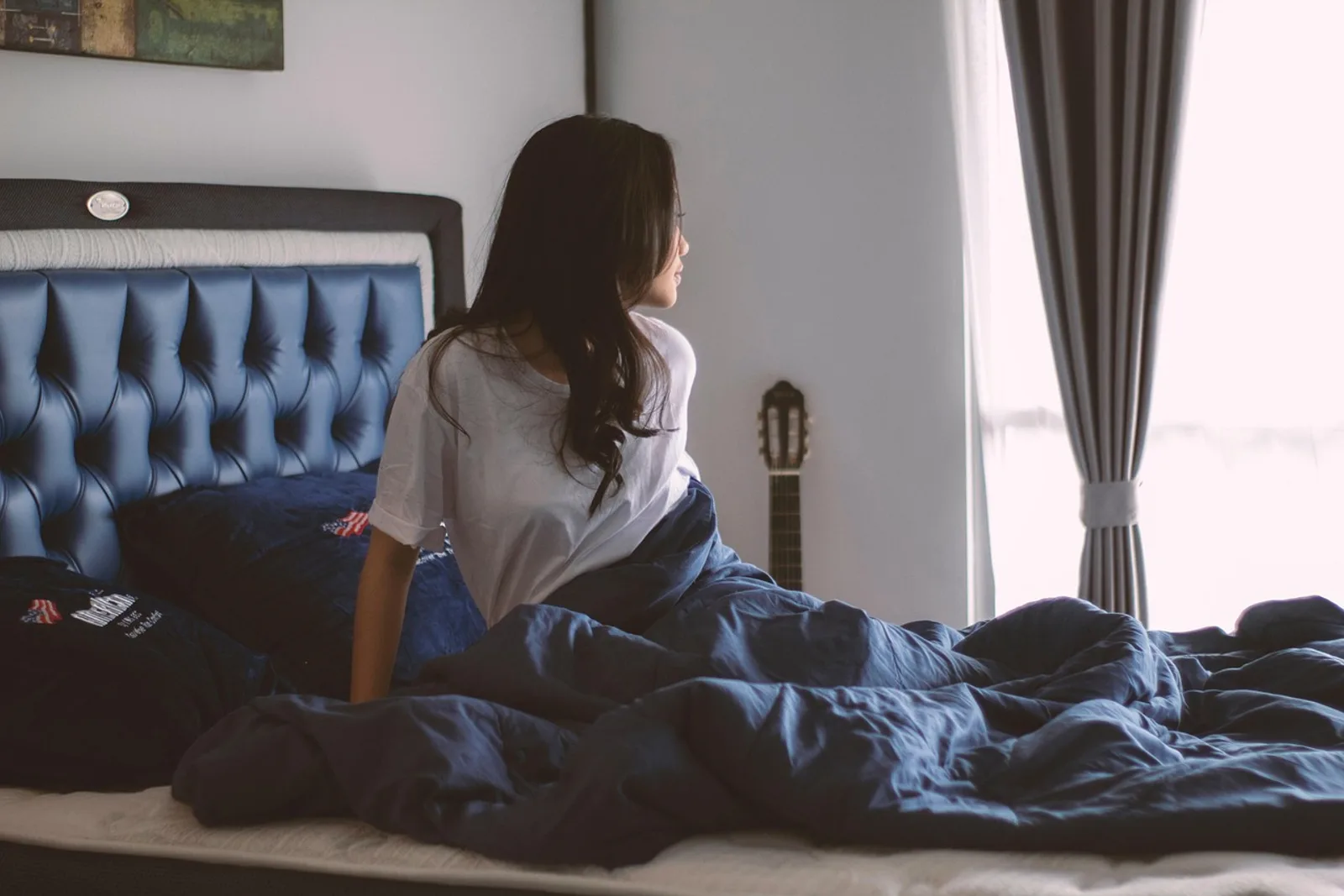
How to reduce stress when breathing alone doesn’t cut it
You can’t simply breathe stress away, because chronic tension isn’t a moment. It’s a state. A breathing exercise calms the next few minutes. It doesn’t change why your system is stuck on high alert in the first place.
You probably know this. You function. At work you deliver, and people rely on you. But underneath there’s a constant hum of tension that never quite lets go. In the evening you can’t come down. Your mind keeps running, even when there’s nothing left to do.
Then you read somewhere: “Just take a deep breath.” You try it. For a moment it helps. Ten minutes later you’re right back where you started. That’s frustrating, and it isn’t a failure on your part. It’s a misunderstanding of how stress works.
Your nervous system has learned a default setting
Your body has two main operating modes. Tension and recovery. One mobilises, the other repairs. When the switch works well, your system returns to rest after every challenge.
Acute stress is useful. Before an important presentation your heart beats faster, your focus sharpens, you’re fully present. Afterwards the system powers down again. That’s exactly how it’s meant to work. These short peaks don’t harm you. They can even help.
With chronic stress, the switch gets stuck. When cortisol release never really ends because the next deadline is already waiting, the emails never stop and your mind won’t switch off at night, your emergency system runs non-stop. Tension becomes the default: the reference point your system keeps returning to. A single breathing exercise is like an umbrella in endless rain. Helpful in the moment. It does nothing about the weather.
Signs your nervous system is stuck in fight or flight
A nervous system stuck in fight or flight sends clear signals, both physical and mental. You just need to learn to read them. The most obvious one: you can’t come down, even when there’s objectively nothing to do.
Physical signals. Chronic stress speaks through your body long before you put a name to it. Typical signs: shallow sleep, a tight neck, digestive trouble, the feeling that you never really get to rest. These symptoms aren’t in your head. They’re the very real bill from a system that has been running at full throttle for too long. You can read more about the physical side in our guide to stress symptoms in the body.
Mental signals. A restlessness you can’t pin down, racing thoughts that spin at night, and a fuse that keeps getting shorter. Little things set you off that wouldn’t have bothered you before.
These states are connected. They’re different faces of the same overactivated system. Whether you want to get rid of inner restlessness or finally stop the racing thoughts, you’re working on the same root: a nervous system that no longer switches into rest mode.
Irritability: when stress spills outward
Irritability is often the first way chronic stress becomes visible: on the outside. When your system is under constant tension, there’s no buffer left for the small annoyances of everyday life.
You snap more sharply than you want to. At your partner, your kids, a colleague. And afterwards, you’re often annoyed with yourself. That isn’t a character flaw. It’s a symptom of an overloaded system.
If you want to get your irritability under control, don’t start with self-discipline. Start with the resting level underneath. When the underlying tension drops, the buffer grows on its own.
What actually helps: two levels instead of one
Lasting stress relief works on two levels at the same time.
Level one is quick relief. It works within seconds to minutes. Breathing techniques, body anchors, a deliberate shift in perspective. These tools are essential when tension spikes: in a meeting, in traffic, before a difficult conversation. We’ve collected some in our guide to relaxation techniques under five minutes.
Level two is rewiring the system. It works over weeks. Daily sleep, movement, regular rest practice, a self-image that allows recovery. This level is unspectacular and slow. But it’s the one that shifts your default.
If you only use the first level, you’ll keep fighting the next wave forever. If you only plan the second, you won’t get through the acute spikes. Together, they form a system.
Why the usual tips fall short
“Take a break.” “Think positive.” “Go for a walk.” Not wrong, just too small. Tips like these address the symptom of the moment, not the pattern behind it.
The real issue runs deeper. Your nervous system has learned that staying alert is safer than relaxing. You don’t unlearn that with a piece of good advice. You unlearn it through repetition. The methods that actually hold up over time work with that repetition.
What the research shows
Research paints a clear picture: our stress system is built for short emergencies, not for constant use. It isn’t designed for months of worrying about work, relationships or the future.
Stanford biologist Robert Sapolsky described this problem in his classic book on stress, Sapolsky (2004). His central image: a zebra activates its stress response when the lion appears and switches it off again afterwards. We humans activate the same ancient emergency system and leave it running for months. Sapolsky’s core argument is that we can trigger the very same stress response with thoughts alone, by worrying about things that haven’t even happened yet. According to Sapolsky, it’s exactly this constant activation that wears us down in the long run, straining the cardiovascular system, the immune system and the brain.
Why some situations floor us while others leave us cold was explained back in 1984 by psychologists Richard Lazarus and Susan Folkman, Lazarus and Folkman (1984). Their model of cognitive appraisal shows that stress doesn’t come from the event itself but from how you evaluate it. Only when you judge a demand as threatening and, at the same time, your own resources as insufficient does your system tip into stress. That’s an uncomfortable insight, but also a freeing one: part of the lever lies with you.
Among quick techniques, breathing is the best researched. The meta-analysis by Laborde and colleagues (2022), which reviewed numerous controlled studies, shows that slow, deliberate breathing at around six breaths per minute measurably increases heart rate variability and lowers heart rate. Heart rate variability is a marker of how flexibly your body’s rest response works. To be honest, though: the meta-analysis measures physical values, not how you feel. Breathing affects your body right away. Whether you also feel calmer right away varies from person to person.
For the second level, rewiring the system, research on meditation is encouraging. The meta-analysis by Sanada and colleagues (2016) found that mindfulness-based approaches can lower levels of cortisol, the key stress hormone, in healthy adults. A recurring pattern in research on rest practice: the effect shows up mainly with regular practice. It isn’t the single session that counts. It’s the repetition.
The bottom line: stress isn’t a character flaw or a question of toughness. It’s a biological state you can influence, partly through how you appraise things, partly through your body, partly through daily routines. None of these levels works miracles alone. Together, though, they can noticeably shift your default state. That’s the genuinely good news from the research: your nervous system can learn, in both directions.
How to reduce stress, step by step
Reducing stress works best in a clear order: first defuse the acute moment, then shift your baseline day by day. The following steps build on each other. You can start with the first one today.
-
Lengthen your exhale. Breathe in for four seconds, out for six to eight. The long exhale activates your body’s rest response. You can do this before a difficult call, for example. Even thirty seconds can help steady your hands. These are the simplest breathing exercises for stress relief, and they work anywhere.
-
Set a body anchor. Choose a small gesture, such as pressing your thumb and index finger firmly together. Link it to a calm moment. Trained repeatedly, the gesture can later help call up that calm. You’ll find more on this in our guide to learning self-hypnosis.
-
Build clear transitions. Your nervous system needs clear signals when pressure ends. A ritual after work marks the line between tension and recovery: music, changing clothes, a short walk.
-
Protect your sleep. Sleep isn’t a reward. It’s your system’s most important repair phase. Regular times, a cool and dark room, no screens in the last hour before bed.
-
Move regularly. Movement helps your body break down stress hormones. It doesn’t have to be a training plan. A brisk walk counts. What matters is regularity, not performance.
-
Practise calm every day. Ten minutes of meditation, breathing practice or hypnosis a day can noticeably shift your resting level over weeks. This is how you anchor new habits that last.
-
Plan for setbacks. Stressful phases will come back. The difference isn’t whether you lose your calm. It’s how quickly you find your way back.
If pressure at work regularly overwhelms you, our guide on handling pressure at work can help. And if situations completely knock you off your feet, our article on immediate strategies for overwhelm offers concrete emergency tools.
Your three-phase plan: from constant tension to a calmer baseline
If you’re wondering how to stop feeling stressed all the time, think of it as building, not sprinting. Your nervous system learned its alarm state over months or years. Retraining it takes time, and a structured approach helps.
Expect it to take a few months rather than a few days for a conscious exercise to become a routine. At first, you’ll have to remember every breathing exercise. Over time, it often runs almost on its own.
The three phases
Phase 1: Stabilise. You start with the quick tools from the steps above and practise them at fixed times. The goal isn’t perfection. It’s repetition.
Phase 2: Deepen. Now you test your body anchor in real stress moments, such as before a difficult conversation, not just in calm ones. Often your system then responds more quickly to the signal to calm down.
Phase 3: Integrate. You set if-then plans for your three most common stressful situations, for example: “If a critical email comes in, I breathe out slowly three times before I reply.” If-then plans like this are well researched: a meta-analysis by Gollwitzer and Sheeran (2006), covering 94 studies, found that they clearly improve goal achievement. Calm increasingly becomes the default. Some people notice this because they bounce back faster after pressure without consciously steering.
Sleep and recovery: the underrated level
Sleep is the most important and most neglected form of stress relief. While you sleep, your body lowers stress hormones, repairs tissue and sorts through the emotional load of the day.
Chronic stress and poor sleep form a vicious circle. Stress robs you of sleep, and lack of sleep amplifies your stress response the next day. You can break into this circle from either end.
The most effective lever is a steady rhythm. Try to get up at the same time every day, weekends included. Your internal clock needs reliability more than long lie-ins. A hypothetical example: someone who sleeps restlessly might start by changing just two things, their wake-up time and the last hour before bed without a phone. Not a miracle cure. Just an attempt to give the system a rhythm again. If sleep problems last for weeks, have them checked by a doctor.
If you can’t switch off in the evening, you need clear transitions and a nervous system that has learned the day is now over. Here too, your default state matters more than any single night.
The 3 most common mistakes
Most people trip up on three avoidable mistakes when trying to reduce stress. Knowing them can save you months of frustration.
Mistake 1: Only working on symptoms. You breathe through the acute moment but change nothing in your daily life. The tension reliably comes back, because the system behind it stays the same.
Mistake 2: Too much at once. Meditation, exercise, journaling, cold showers, all starting Monday. Ten days later, the whole plan collapses. A single small routine you actually stick to is more sustainable. Better ten minutes a day than two hours at the weekend.
Mistake 3: Treating setbacks as failure. One stressful week, your practice slips, and you think: “It doesn’t work anyway.” Yet setbacks are part of the process. All that matters is how quickly you return. If self-doubt is familiar to you, our guide on how to overcome self-doubt offers support.
Explore each part of stress relief in depth
Stress relief has many faces. Each of the following topics covers one aspect you can explore in more depth.
- Getting rid of inner restlessness: when a vague tension never quite lets go, even though everything looks fine on the outside.
- Not being able to switch off: when your mind never clocks out and work follows you all the way to bed.
- Stopping racing thoughts: when the same thoughts spin endlessly at night and keep you from sleeping.
- Overwhelmed? Immediate strategies: concrete emergency tools for moments when everything is too much.
- Getting irritability under control: when you react more sharply than you want to and are annoyed with yourself afterwards.
- Handling pressure at work: when constant professional pressure drains your reserves and you still have to deliver.
- Stress symptoms in the body: recognising and reading the physical signals before they become entrenched.
- Relaxation techniques under five minutes: quick exercises for the acute moment, no preparation needed and usable anywhere.
When stress becomes an illness: the honest limit
Not all stress can be managed with self-help, and saying so openly is part of being honest. When tension lasts for weeks, wrecks your sleep or causes physical symptoms, you’ve crossed the line of what self-help can handle.
Warning signs include ongoing exhaustion despite rest, a racing heart without exertion, recurring digestive problems, low mood over a longer period or the feeling that you can no longer cope with daily life. Chronic stress that has become an illness, such as burnout sliding into depression, can be treated well. But not with breathing exercises alone.
That doesn’t contradict anything on this page. The techniques here are useful building blocks. They don’t replace a diagnosis. If you recognise yourself in these warning signs, talk to your doctor or a therapist. That isn’t failure. It’s the wiser path.
Calm your nervous system with hypnosis: a quiet place to begin
You now know how stress builds up and where you can step in. But knowledge alone rarely shifts your baseline. The pattern that keeps your nervous system on alert sits deeper than any good advice. This is where hypnosis can come in: as calm, repeated training that gives your system a chance to practise relaxing again. Hypnosis is self-help and does not replace medical advice or therapy.
Getting started is free. Choose a ready-made session on a topic that fits you, such as tension that won’t ease off in the evening, from our free introductory hypnosis sessions, and listen to it in bed tonight.
If you want to go deeper afterwards, a free 45-minute 1:1 analysis session with one of our top coaches looks at all 11 areas of your life. It helps you find out whether the Hypnotic Rise programme is right for you: a programme in which every hypnosis is written only for you, around your challenges, your goals and your needs, and listened to in bed in the evening.
Try it yourself
Knowledge alone rarely changes anything. Listen to how your topic can feel different.
FAQ: how to reduce stress
How to reduce stress: where do I start?
Start on two levels at once: right now and over time. If you want to know how to relieve stress fast, begin with your breath. Lengthen the exhale and slow down to about six breaths per minute. For the long term, your system needs daily signals that relaxing is safe: steady rest routines, enough sleep, movement and trained body anchors. Together, they can shift your resting level, not just a single moment.
Why aren’t breathing exercises for stress relief enough on their own?
Because breathing calms the acute moment but rarely changes your baseline. Slow breathing measurably raises heart rate variability and briefly activates your body’s rest response. But if your nervous system is stuck in fight or flight, it tends to snap back into alarm mode soon after. Only daily routines teach your system that calm can be the default rather than the exception.
How to reduce stress when you can’t switch off at night?
Winding down in the evening starts hours earlier, not once you are in bed. Your nervous system needs clear transitions: a fixed ritual after work that tells your body that recovery comes next. Cut back on screens, dim the lights, lengthen your exhale. If thoughts keep circling, write them down. Repeated every evening, this is one of the most practical ways to relax your body and mind.
Which techniques calm your nervous system without any tools?
Slow breathing and mindfulness-based rest practice have good evidence behind them. Laborde (2022) found measurable effects on heart rate variability, and Sanada (2016) found lower cortisol levels in healthy adults. Movement, a steady sleep rhythm and rest routines add to that. What matters most is regularity, not intensity. If your symptoms last for weeks, have them checked by a doctor.
When is stress a case for a doctor or therapist?
If stress lasts for weeks, wrecks your sleep or causes physical symptoms, get it checked by a doctor. Self-help techniques are useful, but they don’t replace a diagnosis or treatment.
Sources
- Lazarus, R. S. & Folkman, S. (1984): Stress, Appraisal, and Coping. Springer Publishing, ISBN 978-0826141910
- Sapolsky, R. M. (2004): Why Zebras Don’t Get Ulcers. Henry Holt and Company
- Laborde, S. et al. (2022): Effects of Voluntary Slow Breathing on Heart Rate and Heart Rate Variability: A Systematic Review and Meta-Analysis. Neuroscience & Biobehavioral Reviews
- Sanada, K. et al. (2016): Effects of Mindfulness-Based Interventions on Salivary Cortisol in Healthy Adults: A Meta-Analytical Review. Frontiers in Physiology
- Gollwitzer, P. M. & Sheeran, P. (2006): Implementation Intentions and Goal Achievement: A Meta-Analysis of Effects and Processes. Advances in Experimental Social Psychology
All articles on Stress relief
Where it shows up in life

Free · ready to listen · no credit card
Your free hypnosis
Pick a ready-made hypnosis on your topic. Free, no credit card.
or book a free 1:1 analysis call right away