How to Switch Off From Work as a Business Owner: 4 Steps
By Florian Lindner · Last updated: 4 October 2026
To switch off from work as a business owner, treat recovery as a business risk, not a test of character, and plan it like cash flow: a trained calm anchor for acute tension, a fixed evening shutdown ritual, protected sleep and the “never two days” rule against constant strain.
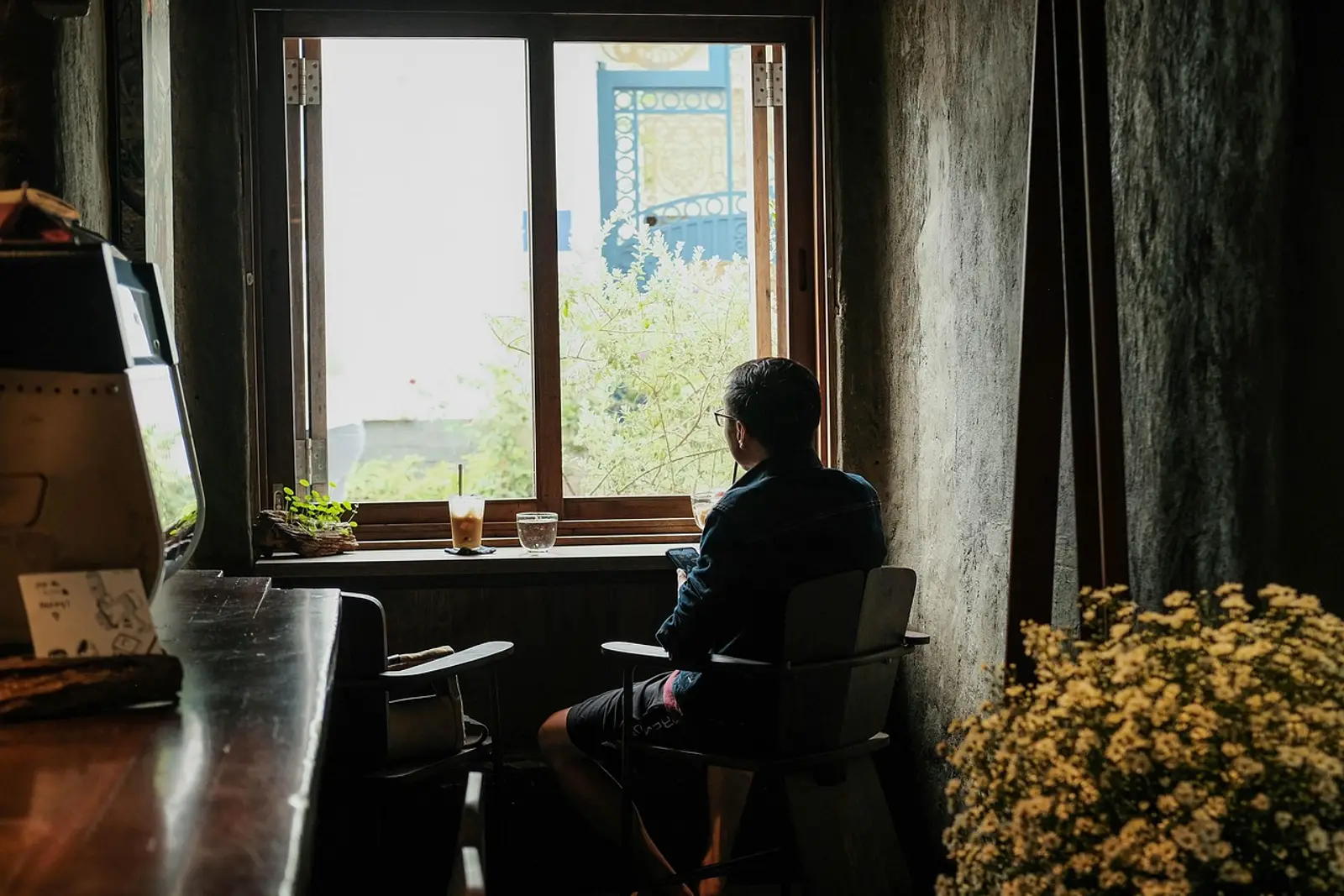
Picture someone running a parts supplier with 60 employees. He hasn’t spent a Sunday without his laptop in four months. He says it’s just a phase. His partner says the phase has now lasted three years. They’re both right. And that’s exactly the problem.
Learning how to switch off from work as a business owner doesn’t mean learning to endure even more. It means taking recovery as seriously as cash flow: planned, protected, monitored. Below you’ll find out why business owners struggle with this so much, what the research says, and how you can build calm as a skill you train. This article is part of our hub on hypnosis for entrepreneurs. That’s where you get the big picture. Here you get the practice for constant pressure.
Why business owners treat rest as a weakness
Business owners treat rest as a weakness because three mechanisms work together: the company depends on them personally, strain feels like performance, and nobody forces them to stop. The result is a system with no end to the working day, and a mind that can no longer give itself one.
The company is wired to you
An employee can call in sick. A business owner feels they can’t, because the company would notice immediately. That link is real. In our example, the bank, the three biggest clients and the salaries of 60 families all run through his signature. When you’re wired like that, every break feels like leaving yourself exposed.
Responsibility isn’t the problem. The problem is the conclusion business owners draw from it: if everything depends on me, I can’t drop out, so I can’t stop. The second part doesn’t follow from the first. It only leads to where you don’t want to go.
Strain feels like performance
Working sixteen hours straight, pushing through the weekend, sending an email at 3 am: among founders, that isn’t a warning sign. It’s a badge of honour. Plenty of people wear their exhaustion like a medal.
Behind it sits a stubborn thinking error: strain gets confused with output. But what you’re paid for isn’t hours. It’s decisions. And research on fatigue and lack of sleep shows that as exhaustion grows, the quality of decisions suffers, often without you noticing.
Nobody forces you to stop
Employees have managers, HR and working-time rules. Business owners have themselves. That sounds like freedom. For recovery, it’s a trap: without an external boundary, you need an internal one. And most people have never trained it.
The business owner in our example has no rule for when his day ends. So it ends when the battery runs out, his laptop’s or his own. Neither is a plan. If you can’t stop thinking about work after work, you rarely have a willpower problem. You have a boundary problem.
What the research shows
The research makes three things clear: business owners often report psychological strain in studies, mental detachment is a central factor in recovery research, and sleep deprivation attacks exactly the abilities business owners earn their money with.
Strain among business owners is not a fringe issue. In 2019, Freeman and colleagues (2019) surveyed 242 entrepreneurs and 93 demographically comparable people for the journal Small Business Economics. 49 percent of the entrepreneurs reported having had at least one mental health condition in their lifetime, 30 percent named depression, 29 percent ADHD, and 32 percent two or more conditions. The study relies on self-report and a US sample. It doesn’t prove cause. But it makes one thing clear: if you’re running on reserve as a business owner, you’re in good company. And you should take it seriously.
Detachment can be measured, and it matters. In 2007, Sabine Sonnentag and Charlotte Fritz developed the Recovery Experience Questionnaire (Sonnentag & Fritz, 2007) and identified four recovery experiences: psychological detachment, relaxation, mastery and control over leisure time. In their stressor-detachment model (Sonnentag & Fritz, 2015), drawing on a broad body of studies, they show: if you don’t let go mentally after work, recovery tends to suffer, even when your body is lying on the sofa. At the same time, high strain reduces your ability to detach. A vicious circle that can hit people under constant pressure especially hard, and that often includes business owners.
What hypnosis research shows, and what it doesn’t. A meta-analysis by Valentine and colleagues (2019) evaluated 17 controlled trials from 15 studies. The average person receiving hypnosis reduced anxiety more than about 79 percent of the control group; at the longest follow-up, it was around 84 percent. Hypnosis worked best in combination with other psychological approaches. One important point for context: these studies looked at anxiety mostly in clinical and medical settings. Business hypnosis does not treat disorders. We apply the approach to everyday tension in healthy people. That transfer hasn’t been proven yet. More on this on our science page.
Sleep has a say in your decisions. In 2010, William Killgore (2010) summarised the effects of sleep deprivation on cognition in Progress in Brain Research: attention, emotional regulation and executive functions suffer first. That means planning, weighing options, controlling impulses. When it comes to sleep deprivation and decision making, these aren’t side skills. They’re a business owner’s core business.
How to switch off from work as a business owner: step by step

You build this in four steps: set a calm anchor, define a shutdown ritual, protect your sleep, and secure your recovery with one rule. Each step is small on its own. Together, they can change how you deal with pressure.
Step 1: Train a calm anchor
A calm anchor is a physical signal that triggers a calm state without you having to think your way into it. One example: pressing your thumb and index finger onto your wrist for two seconds, combined with a long exhale.
Here’s how it forms. In a hypnosis session, for example an audio hypnosis in the evening, you experience a state of deep calm and link it to the gesture. Then comes the crucial part most people skip: you recall the anchor every day, three to five times, in moments without stress. Only that repetition makes it hold up. Over time, it can help you even when the bank calls. Why business owners work with this approach, and where its limits are, is explained in our guide to hypnosis for entrepreneurs.
Step 2: Set a shutdown ritual
Your working day needs an ending that doesn’t depend on battery levels. A shutdown ritual is a fixed sequence of five to ten minutes that marks the transition: note open items, write down three priorities for tomorrow, close the laptop, put your phone in another room.
The goal is what Sonnentag calls psychological detachment. Unfinished tasks tend to keep circling in your mind. Give them a parking space on paper, and letting go becomes easier. This is the core of how to switch off from work at night. Phrase the ritual as an if-then plan: if the clock says 7 pm, then I write down the three items for tomorrow. How to shape the rest of your evening is covered in our guide to a wind-down routine before bed.
Step 3: Protect sleep as a decision-making resource
Treat sleep like a meeting with your most important client: it doesn’t get moved because something comes up. For most adults, seven hours is the floor, not the goal.
Two rules are enough to start. First: a fixed wake-up time, weekends included. It stabilises your rhythm more than your bedtime does. Second: no decisions above a threshold you set in advance, say anything in five figures, after 10 pm or on less than six hours of sleep. That sounds like a house rule. It’s risk management. If you want to stop being indecisive and make better decisions, start with sleep, not with a method.
Step 4: Secure recovery with the “never two days” rule
The rule is simple: one day without real recovery is allowed. Two in a row aren’t. Real recovery means at least 60 minutes without work, without screens, without thinking about the company: exercise, family, working with your hands, a walk.
The rule works because it doesn’t ask for perfection. Exception days are part of running a business: the trade fair, year-end accounts, a crisis at a client. It only gets dangerous when the exception becomes a streak. “Never two days” draws the line exactly where recovery debt begins. One tip: tick it off in your calendar. If you break the rule once, you correct it the next day instead of giving up after the first slip.
The 3 most common mistakes
The three most common mistakes when business owners try to relax are: treating rest as a reward instead of a requirement, confusing distraction with switching off, and waiting until the body makes the decision for you.
Mistake 1: Rest as a reward. “Once this project is done, I’ll take time off.” The project is never done. Business owners who attach conditions to recovery don’t recover. They postpone. Rest isn’t a bonus for good performance. It’s what makes good performance possible.
Mistake 2: Distraction instead of detachment. Watching two hours of TV while your mind rehearses the meeting with your accountant isn’t recovery. Sonnentag and Fritz make a clear distinction: what counts is mental distance, not physical distance. If you numb yourself, you end up with the same tension as before, plus two lost hours. If you’re wondering how to reduce stress as a business owner, what actually helps to calm your nervous system is quite different from what feels good in the moment.
Mistake 3: Waiting for your body to decide. Many business owners keep going until the warning light comes on: poor sleep, a racing heart, snapping at the team. Then they take a week off and carry on as before. Resilience means drawing the line before your body draws it for you. That’s the difference between leading and reacting.
Where business hypnosis at Hypnotic Rise comes in
Business hypnosis at Hypnotic Rise starts where the four steps often fail: with the self-image that counts rest as weakness. In a free 1:1 call, the analysis session, all 11 areas of your life are analysed in depth. From that, we build Hypnotic Rise, a programme created only for you, around your challenges, goals and needs. Every hypnosis in it is written only for you and listened to in bed at night, right at the moment your working day is meant to end. You put the calm anchor, the shutdown ritual and the sleep rules from this article into practice yourself, alongside it.
The starting point is the free hypnosis: you choose a ready-made hypnosis on the topic that’s on your mind most right now, for example switching off after a long day. After that comes a free 1:1 analysis session, 45 minutes with one of our top coaches. How the programme is set up for business owners and managing directors is shown on Hypnotic Rise Business; the process in detail is explained on the programme page.
An honest limitation: the hypnosis research we rely on comes mostly from clinical settings. There are hardly any studies specifically on hypnosis for healthy business owners. We’re applying a researched mechanism to a new group. Whether it works for you will show in your everyday life. That’s more honest than a promise.
And a clear boundary: if you’ve been waking up exhausted for weeks, have lost joy in everything or your sleep is disrupted over a long period, that’s not a case for a training programme. Burnout and depression belong in medical or psychotherapeutic care. Hypnosis is a form of self-help and does not replace therapy or medical advice. Business hypnosis is for healthy people who want to protect their capacity. Mixing the two up would do you harm. In that case, talk to your doctor first.
Conclusion: rest is a leadership decision
Resilience isn’t a trait you either have or don’t. It’s a series of decisions you make every day: when your day ends, whether you sleep, whether one day without recovery is followed by a second. The business owner in our example doesn’t have to make any of these by gut feeling. He can turn them into rules and train them, just as he doesn’t leave his production line to instinct.
You probably nodded along while reading. The four steps aren’t complicated. And yet tonight at 10 pm you might reach for the laptop again. That’s not a lack of knowledge. The pattern that counts rest as weakness sits deeper than any rule you set yourself. That’s where hypnosis comes in: not with the rational mind, which already knows all this, but with the part of you that still replays bank meetings at night. You can try it free of charge and without any commitment. Choose a hypnosis on switching off in our free hypnosis to help you unwind after work and listen to it in bed tonight. Afterwards, you’ll have a first sense of whether this approach suits you. If it does, the Hypnotic Rise programme shows how a programme built only for you takes it further.
Try it yourself
Knowledge alone rarely changes anything. Listen to how your topic can feel different.


FAQ: how to switch off from work as a business owner
How do you switch off from work as a business owner?
You stop treating it as a willpower problem and build a system instead. Four building blocks help: a physical calm anchor for acute tension, a fixed shutdown ritual in the evening, sleep as a protected resource and one simple rule against recovery debt. Each of these can be trained. And you don’t need anyone else to tell you whether it works: you can see it in your own days.
How does sleep deprivation affect decision making?
Research shows that lack of sleep impairs attention, emotional regulation and executive functions: planning, weighing options, controlling impulses. For business owners, that’s the core of the job. Someone who has been running on reserve for weeks tends to judge risk worse, and is often the last to notice. That’s why recovery isn’t a wellness topic. It’s risk management for the quality of your decisions.
Which resilience strategies for entrepreneurs can you actually train?
Anything that improves through repetition in the same context. A calm anchor is set in hypnosis and then recalled briefly every day, so it holds up more easily under pressure. If-then plans define when your working day ends. A shutdown ritual marks the boundary. The Hypnotic Rise programme Hypnotic Rise supports you with hypnoses written only for you. Scope and duration are set individually after an analysis of all 11 areas of your life.
Can business hypnosis help with entrepreneur burnout recovery?
No, and we want to be clear about that. Burnout and depression belong in the hands of a doctor or psychotherapist. Business hypnosis at Hypnotic Rise is for healthy business owners and leaders who want to protect their capacity and train their ability to recover. If you’ve been exhausted for weeks, aren’t sleeping or have lost joy in everything, your first step is an appointment with a doctor.
How does the “never two days” rule help you switch off from work as a business owner?
It’s a simple rule against recovery debt: you can have one day without real recovery, but never two in a row. One exception is normal. A streak becomes a pattern. The rule works because it doesn’t ask for perfection. It only stops the exception from turning into a habit, which makes a recovery routine much easier to keep up through busy weeks.
Sources
- Freeman, M. A., Staudenmaier, P. J., Zisser, M. R., & Andresen, L. A. (2019): The prevalence and co-occurrence of psychiatric conditions among entrepreneurs and their families. Small Business Economics, 53(2), 323–342
- Sonnentag, S., & Fritz, C. (2007): The Recovery Experience Questionnaire: Development and validation of a measure for assessing recuperation and unwinding from work. Journal of Occupational Health Psychology, 12(3), 204–221
- Sonnentag, S., & Fritz, C. (2015): Recovery from job stress: The stressor-detachment model as an integrative framework. Journal of Organizational Behavior, 36(S1), S72–S103
- Valentine, K. E., Milling, L. S., Clark, L. J., & Moriarty, C. L. (2019): The efficacy of hypnosis as a treatment for anxiety: A meta-analysis. International Journal of Clinical and Experimental Hypnosis, 67(3), 336–363
- Killgore, W. D. S. (2010): Effects of sleep deprivation on cognition. Progress in Brain Research, 185, 105–129
Go deeper: Business hypnosis
Related challenges
Where it shows up in life

Free · ready to listen · no credit card
Your free hypnosis
Pick a ready-made hypnosis on your topic. Free, no credit card.
or book a free 1:1 analysis call right away